What should your collection agency priorities be for the rest of 2026
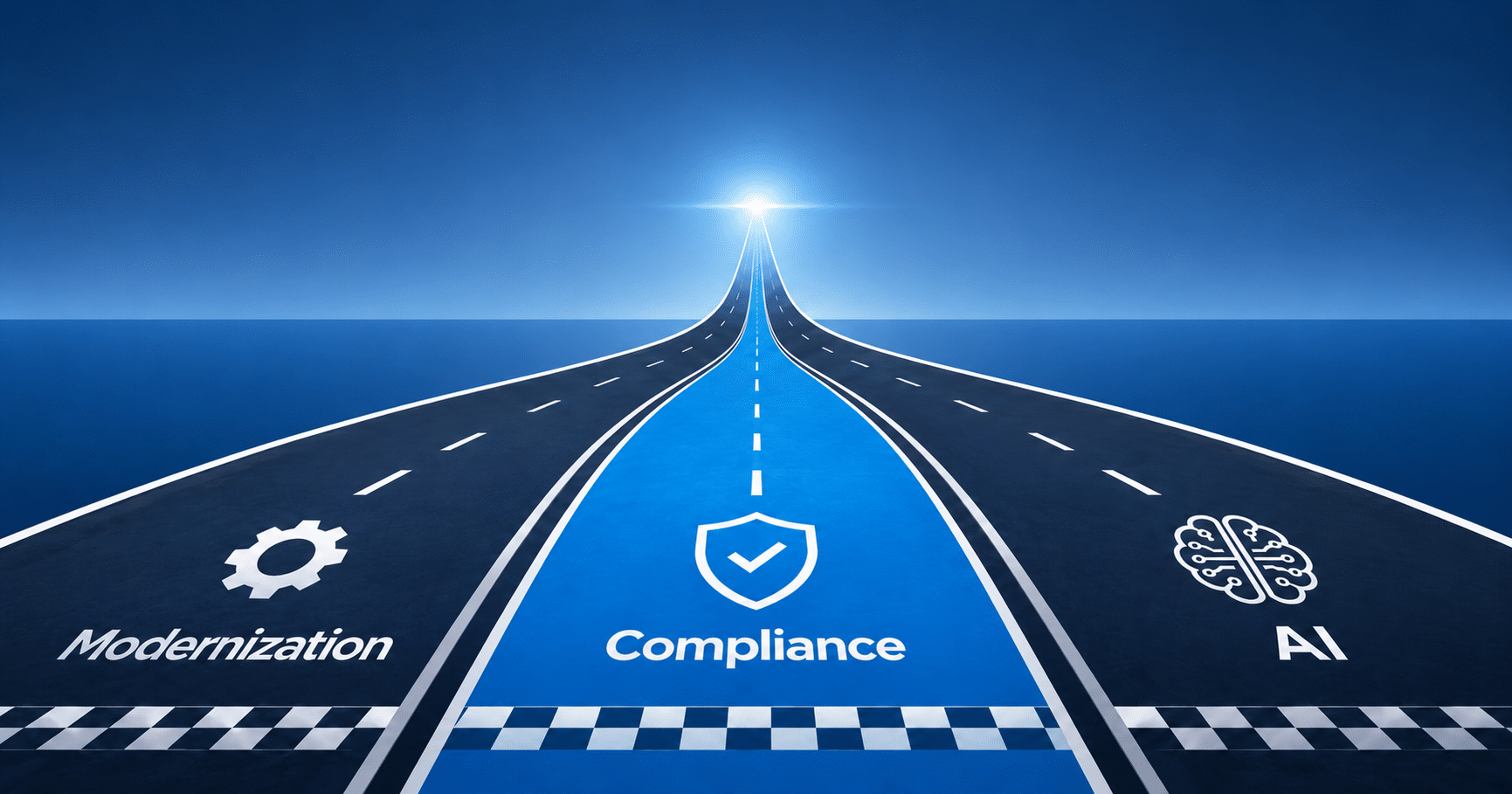
TABLE OF CONTENTS
The 2026 ACA International convention wrapped up in Orlando last week, and this is the week that follows every big industry event: everyone’s back at their desks with a stack of notes, a longer vendor list than they left with, and one very practical question. What should our priority be for the rest of 2026?
Ask around and you’ll hear the same three answers: payment modernization, compliance, and AI. Three tracks you see at most conferences. And three budget lines, if you let them be.
Here’s the argument I want to make about these collection agency priorities: they aren’t as separate as they look. Each one, followed to its practical end, lands in the same place. The moment a consumer decides to pay.
We previewed this concept before the show, when we read the session schedule and noticed every track quietly pointing at the same destination. Nothing since has changed our mind. So let’s turn it into a plan.
Priority one: payment modernization is a completion problem
Strip away the buzzwords and payment modernization is one question. When a consumer decides to pay, can they finish? Tonight, in the channel they’re already in, without waiting for your office to open. Cards, ACH, digital wallets, text link, IVR, portal. Every channel you don’t offer is a consumer who was ready to pay and didn’t.
The preference data keeps moving in one direction. We made the full case for digital wallets back in June, so I won’t re-argue it here, but the topline keeps climbing: PayNearMe’s consumer research now finds 59% of consumers likely or very likely to pay loans with a digital wallet, up from 37% in 2021. That’s the middle of the market talking, not the early adopters.
And preference converts.
McKinsey’s digital-first collections research found that customers contacted through digital channels make 12% more payments than those reached through traditional ones. Later in delinquency, consumers were 30% more likely to pay when contacted through their preferred channel. Channel fit isn’t a courtesy. It’s completion rate.
Recovery isn’t won in the outreach. It’s won at the finish line.
Priority two: compliance didn’t get easier, it got scattered
Yes, federal supervision is contracting.
Reporting this year describes CFPB examinations dropping from hundreds annually to fewer than seventy, with the bureau’s focus narrowing toward the largest banks. And the CFPB’s medical debt credit reporting rule was vacated in federal court in July 2025 before it ever took hold.
It’s tempting to read that as deregulation.
The state level tells a different story. More than a dozen states passed their own medical debt reporting restrictions, laws that are now themselves caught up in preemption fights. And states like California, Colorado, and New York keep adding collection-specific requirements. We’re talking about contact limits tighter than Regulation F in some, licensing expansions in others, fee rules that differ from the state next door.
A quieter Washington doesn’t mean a quieter regulator. It means fifty of them.
For a multi-state agency, the patchwork lands hardest at the payment layer: which fees you can charge, how they’re disclosed, how authorizations are captured and stored.
Your payment stack isn’t adjacent to your compliance program anymore. It’s load-bearing.
Priority three: AI earns its keep at the finish, not the pitch
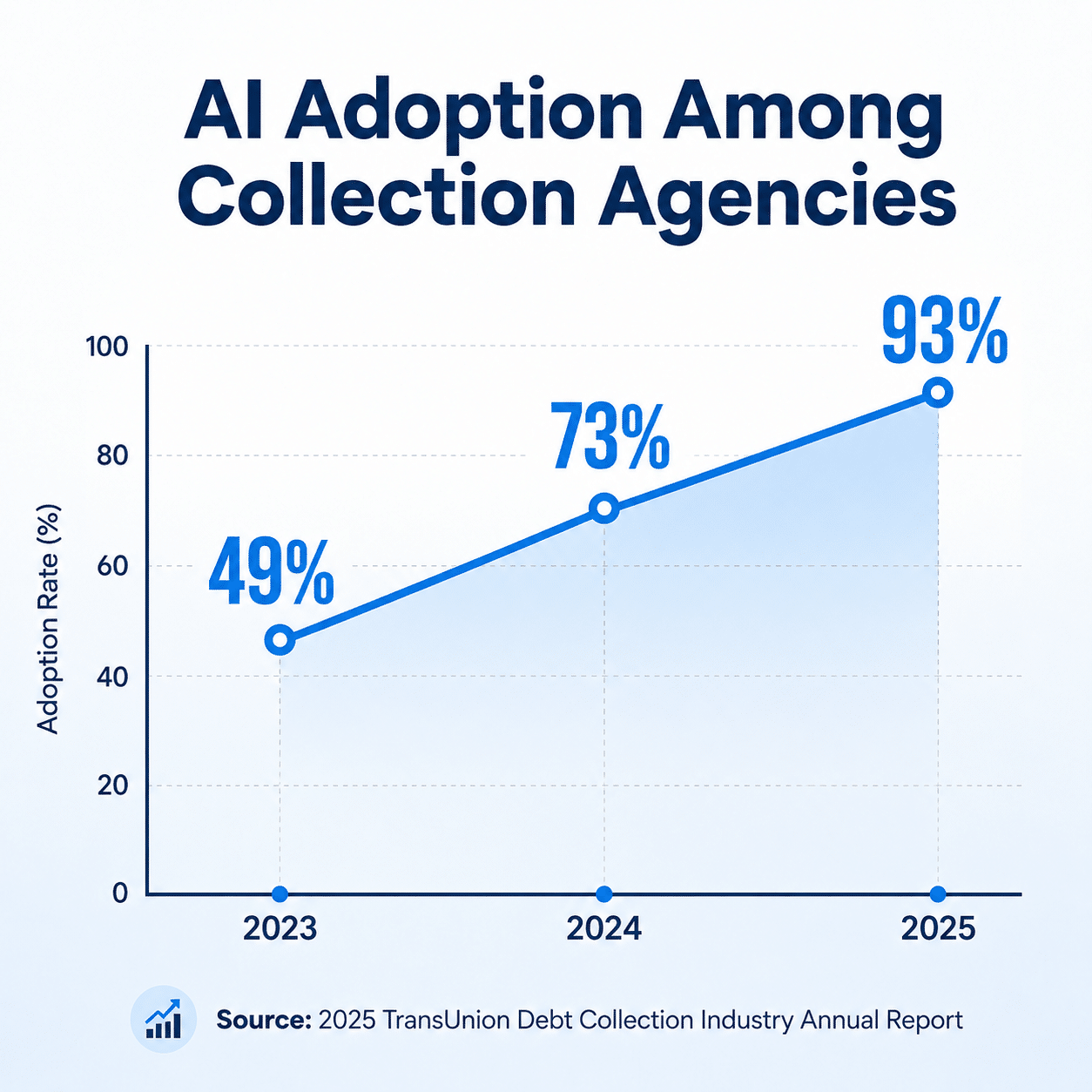
The adoption race is over. TransUnion’s Debt Collection Industry Annual Report tracked AI and machine learning use among collection firms from 49% in 2023 to 73% in 2024 to 93% in 2025. Somewhere in the last eighteen months, AI stopped being a differentiator in this industry and became the default.
Which changes the question. Industry surveys suggest roughly two-thirds of firms now run self-service tools that can set up plans or negotiate settlements without an agent involved. When everyone’s AI can hold a conversation, the differentiator is whether the conversation ends in a completed, compliant payment that posts cleanly to your system of record.
We put it this way before the show: engagement that doesn’t end in an easy payment is just an expensive conversation.
The AI version raises the stakes. An agent that negotiates a settlement at 9 pm and then hands the consumer a payment flow that can’t finish until a human picks up the next morning isn’t automation. It’s an expensive conversation on a bigger budget.
So here’s the test for every AI vendor demo this fall: show me the last thirty seconds. The negotiation is impressive. Now show me the consumer actually paying, in their channel, at their hour, with the fee handled correctly and the data landing where my team works. If the demo goes quiet there, you’ve found the gap.
Three collection agency priorities, one project
Notice what just happened. Payment modernization ends at the payment moment by definition. Compliance risk concentrates there, because that’s where money, fees, and disclosures meet. And AI’s value gets decided there, because that’s where conversations either become recoveries or don’t.
Which means setting up for a strong 2027 doesn’t require three transformation programs. It requires one honest audit, run before the year wraps.
Count the ways a consumer can finish a payment with you tonight, without an agent. Ask how your convenience fee program would hold up if a client audited it state by state tomorrow. Check whether payment data flows cleanly into the systems your team actually runs, or whether month-end still involves a spreadsheet with a name.
Then count the number of vendors that touch your payment process. Every additional one is another integration, another support queue, another compliance review, another round of finger-pointing when something breaks at 4:55 on a Friday.
The agencies moving with the most confidence right now aren’t the ones with the most tools. They’re the ones consolidating: one payment partner, every channel, one accountable relationship, one team that knows their account by name.
Strengthen the moment where a consumer decides to pay, and all three priorities improve at once.
Where Payment Savvy fits
This convergence is the problem Payment Savvy was built around back in 2011: one partner covering every payment channel. Built for collections specifically, with fee programs that hold up under state-level scrutiny and support that knows your name before you call.
If you took the Finish Line Check at our booth in Orlando, you already have your score. Let’s talk. If you didn’t, send us a message and we’ll pressure-test these priorities against your current setup.
Either way, we’d welcome the conversation.
The agencies that win the rest of 2026 won’t be the ones that chased three priorities. They’ll be the ones that noticed it was one.
PAYMENT SOLUTIONS
FEATURED INDUSTRIES