The 7 Conversations We Expect at the 2026 ACA Convention

TABLE OF CONTENTS
Next week, most of our industry will be in the same building.
The 2026 ACA Convention runs July 22–24 at Rosen Shingle Creek in Orlando. Three days of sessions, a packed expo hall, and the kind of hallway conversations that end up shaping strategy more than any keynote does. It’s ACA International’s largest event of the year, and what gets talked about there tends to set the tone for the next twelve months.
We read the full session schedule – every breakout, every Innovation Stage demo, every panel description. A clear picture emerged.
Here are the seven topics we expect to dominate Orlando, plus a conversation starter to carry onto the floor for each one. Discuss them with vendors, panelists, and the operators you respect. The answers will teach you as much about your own shop as about theirs.
1. AI voice agents have moved from “should we?” to “show me the numbers”
Three years ago, an AI agent taking a live collections call was a novelty demo. At ACA 2026, it’s practically its own conference track. Prodigal is presenting lessons from what it calls the most deployed AI voice agent in debt collections. Aktos is running a live demo of LLM-powered phone agents. Veritus is walking through an agency case study where an AI voice agent handles after-hours calls end to end: identity verification, negotiation, PCI-compliant payment, the whole thing.
The numbers vendors are reporting are eye-catching. One case study claims 71% call containment, with one in five calls ending in a payment. The direction is unmistakable: the industry question is no longer whether AI can hold a compliant collections conversation. It’s how you verify that it did.
Bring this to the floor: Ask every AI voice vendor to show you the audit trail from a real 2 a.m. settlement call, and how it held up the last time a client’s auditor or regulator reviewed it.
2. AI governance is quietly becoming its own department
Here’s what surprised us most about the schedule. For every session about deploying AI, there’s another about controlling it. There’s a session on ISO/IEC 42001, the first international standard for AI management systems. Another on what actually happens to the data your team pastes into ChatGPT or Copilot, complete with a plain-language guide on what’s safe to enter. A regulatory mapping session for attorneys. And one titled, tellingly, “AI is Already Inside Your Organization, Now What?”
That last title is the honest one. Teams everywhere are already using these tools, sanctioned or not. The governance conversation stopped being optional the day the first well-meaning employee pasted account notes into a free chatbot.
Bring this to the floor: Ask the operators you respect who owns AI policy in their shop and how they chose that person.
3. The litigation numbers will do a lot of the talking
The compliance sessions have plenty of fresh material to work with. WebRecon’s 2025 Year-in-Review showed consumer litigation up across the board: FCRA filings up 37.4% year over year, FDCPA up 7.8%, and CFPB complaints up a striking 89.1%.
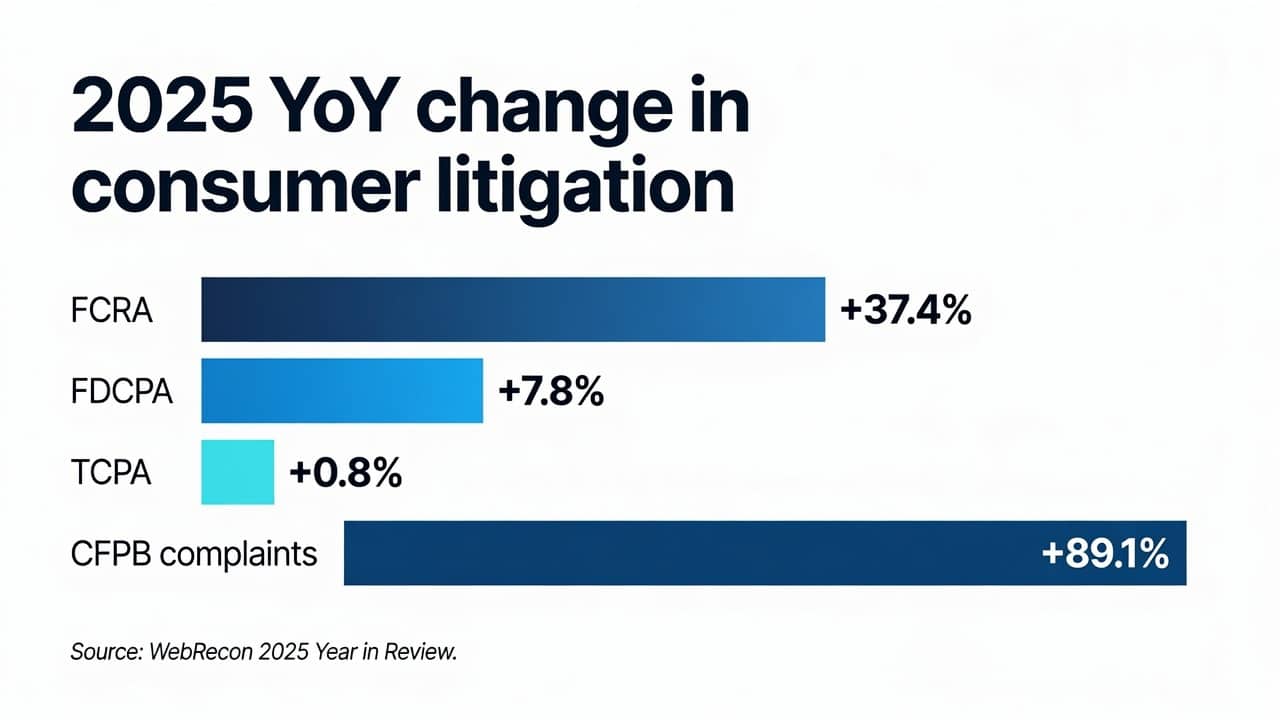
There’s a session dedicated entirely to the past year’s wave of FCRA, FDCPA, and TCPA court decisions, and another on the rise of pro se litigation, where consumers arrive in court armed with AI tools and advice from legal influencers. Highly motivated, inconsistently informed, and increasingly common.
Compliance leaders won’t be short on conversation topics in Orlando.
Bring this to the floor: Ask panelists which single decision from the past year should change daily operations at an agency your size, not just the policy binder.
4. Nobody can predict the CFPB. Plan accordingly.
Brownstein’s advocacy panel will break down CFPB litigation, FCC policy, and the pending legal challenges to Bureau actions. There’s also a main-stage session on the affordability agenda and what shifting federal priorities mean for the business.
The truth is, nobody in that room can tell you what the regulatory environment looks like eighteen months out. What the best operators have figured out is that this matters less than it feels like it does. A compliance program built on documented, consumer-respectful practices holds up under any administration. A program built on guessing the next enforcement priority doesn’t.
Bring this to the floor: Ask the advocacy panel what the best-run agencies are building into their compliance programs that doesn’t depend on guessing the Bureau’s next move.
5. Consumers already voted on how they want to engage
“The New Digital Collector: Text, Email, AI, and Beyond” is the session title, but the data has been pointing this way for years. PayNearMe’s March 2024 consumer research found 45% of Millennials indicated reminders would help them pay on time, 51% of Gen Z said text reminders would help, and 77% of baby boomers consider pre-populated payment details important.
Consumers aren’t avoiding payment. They’re avoiding friction, and phone-first outreach is friction for a growing share of them.
And it isn’t one shift. It’s several happening at once. The agencies getting results are segmenting engagement by preference, not just by balance and age of debt.
Bring this to the floor: Ask the presenters what data finally convinced them to move a portfolio from phone-first to digital-first, and which number surprised them most.
6. Your collectors need a seat at the modernization table
One of the more practical sessions on the schedule focuses on something vendors rarely mention in demos: getting live agents to actually adopt the new tools. Training collectors to work alongside AI bots, generative reply tools, and self-service platforms, and preparing them for consumers who now arrive through AI-assisted conversations, self-service channels, and call-screening technology.
We’ve watched excellent technology deliver mediocre results, and it’s almost never the technology. It’s the rollout. Change management sounds soft until it’s the reason a six-figure platform investment sits at 40% utilization.
Bring this to the floor: Ask peers who’ve already rolled out AI tools what their best collector said in month one, and what they’d do differently to win them over sooner.
7. Every one of these conversations ends at the payment moment
Read the schedule closely and a pattern shows up. The AI voice agents are negotiating and taking payments inside a single call. The digital engagement sessions talk about compressing billing and payment into one interaction. The self-service sessions are about consumers resolving accounts without ever talking to anyone.
Different technologies, same destination: the moment a consumer decides to pay, and whether anything gets in their way.
The payment moment is the finish line of the collections process. You can modernize every step before it, from smarter outreach to AI-assisted conversations, and still lose resolved-in-principle accounts to a clunky payment experience. Engagement that doesn’t end in an easy payment is just an expensive conversation.
Bring this to the floor: Ask every payment provider you meet (including us!) the same question: what happens when they pay? Count the steps between the consumer’s yes and the posted payment. Every step is a place where resolution goes to die. Then go home and count your own.
See you at the 2026 ACA Convention
Here’s what makes ACA worth the trip. The sessions put the industry’s best thinking on stage, and the conversations they start don’t end when the room empties. They carry into the expo hall, over dinner, into the hallway between breakouts. Three days in the same building as the people who run this industry, all working through the same questions at the same time. That’s rare.
So bring all seven questions with you. Ask them in sessions, ask them on the expo floor, ask them at Paddles & Pints if that’s your style. The leaders who get the most out of Orlando won’t be the ones who attend the most sessions. They’ll be the ones who leave with better questions than they arrived with.
And come say hi to us. We’ll be at booth #411, and on Friday morning we’re sponsoring the Morning Break & Innovation Stage in the Expo Hall, which means the coffee is on us July 24. Tell us which of these predictions you’d bet against. We want to hear it.
See you soon, Orlando!
PAYMENT SOLUTIONS
FEATURED INDUSTRIES